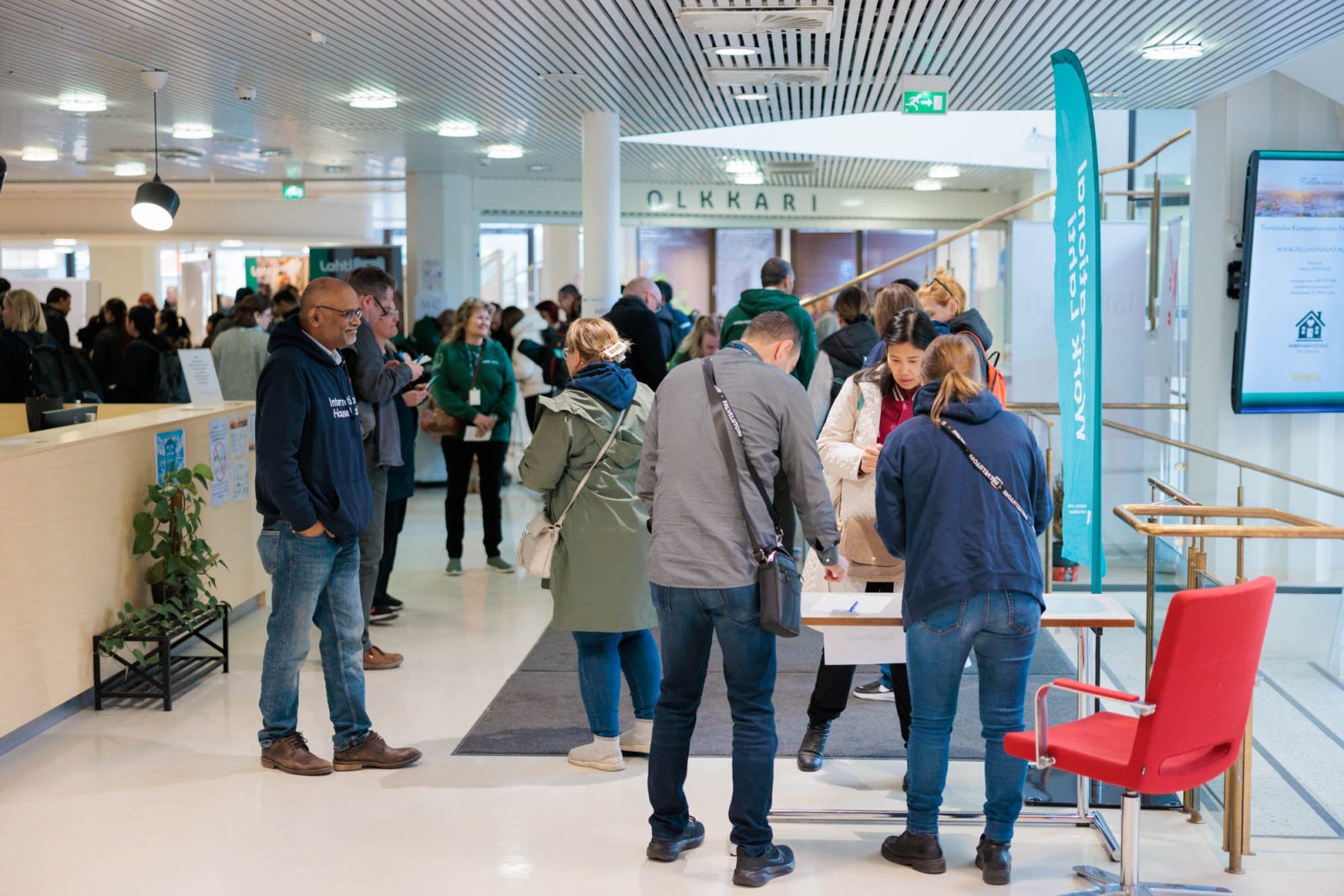
The SROI assessment conducted by the Rehabilitation Foundation covered the period from January 1, 2024, to May 31, 2026, during which the project resulted in 160 job placements. According to the assessment, the project’s total impact reached nearly 6.7 million euros. However, the project will continue until the end of 2026.
A personalized model matches job seekers’ skills with employers’ needs
Behind these job placements lies a personalized rapid recruitment model developed and tested by the project. In this model, the job seeker’s education, professional skills, work experience, and language proficiency are matched with the skill needs identified by employers. If necessary, the job seeker’s skills are supplemented, and both the job seeker and the employer are supported throughout the various stages of the recruitment process.
The diversity of the client group and the changing labor market situation have required continuous development of the operating model and flexible adaptation of services to different situations.
– Impactful results do not stem solely from the number of clients or the services provided. What matters is what the activities achieve. The evaluation shows that investing in employer collaboration and one-on-one interactions creates value for job seekers, employers, and society as a whole, says Hilkka Kulju, project manager for the International Work Lahti project.
SROI evaluation makes the benefits of the initiative visible
SROI (Social Return on Investment) is an evaluation method in which the economic and qualitative benefits of an initiative are quantified in monetary terms and compared to the costs incurred.
In the assessment, the direct economic benefits of the International Work Lahti project were calculated at approximately 6.58 million euros. When qualitative benefits were also taken into account, the total impact amounted to approximately 6.68 million euros. The ratio of these benefits to the project’s costs of approximately 1.7 million euros resulted in an SROI figure of 3.93. In practice, this means that for every euro invested in the project, an estimated 3.93 euros of social value was generated.
During the evaluation period, the project reached 523 clients and conducted over 3,600 client encounters. International Work Lahti is a project administered by the City of Lahti and co-funded by the EU.
Social value more than 15 times the City of Lahti’s own funding
The evaluation also examined separately the City of Lahti’s self-financing contribution of approximately 425,000 euros. When all estimated benefits were taken into account, the SROI figure calculated for the city’s self-financing contribution was 15.7. This means that for every euro the City of Lahti invested in the project, an estimated 15.7 euros of social value was generated. The SROI figure based solely on direct economic benefits was 15.5.
The results of the evaluation show that the success of ESF+ projects should be assessed not only based on the measures implemented but also on the impacts they generate. According to the Rehabilitation Foundation, the operating models developed in the International Work Lahti project should also be utilized after the project period as part of regional employment and integration services.
Although the operational model was developed to promote the employment of foreign-language job seekers, its key elements—individualized coaching, close cooperation with employers, and matching skills to actual recruitment needs —can also provide insights for developing services for other groups facing employment challenges, such as young people and the long-term unemployed.
The SROI assessment of the International Work Lahti project was published on September 1, 2026, on the Rehabilitation Foundation’s website.
International Work Lahti -hankkeen SROI-arviointi